Last Updated on 18/01/2026 by Jack Anderson
India’s defense capabilities are getting a significant boost with the introduction of the Bhairav light tank, a high-speed combat unit designed specifically for the challenging terrains along our northern borders. As tensions in mountainous regions continue to demand advanced military solutions, the Bhairav represents a leap forward in India’s armored warfare strategy. This indigenous fighting machine combines speed, firepower, and agility in ways that traditional heavy tanks simply cannot match.
Understanding the Bhairav Light Tank
The Bhairav light tank is not just another addition to India’s military arsenal. It’s a specialized combat vehicle engineered to operate where conventional tanks struggle. Weighing approximately 25 tons, significantly lighter than the 50-ton Arjun main battle tank, the Bhairav can navigate narrow mountain roads, cross lightweight bridges, and deploy rapidly in high-altitude areas where oxygen levels challenge both men and machines.
What makes this combat unit particularly special is its development by the Defence Research and Development Organisation (DRDO) in collaboration with Larsen & Toubro. The project emerged from hard lessons learned during border standoffs, where the need for rapid deployment of armored firepower in mountainous terrain became painfully clear.
Key Features That Set Bhairav Apart
The Bhairav isn’t trying to be a main battle tank. Instead, it fills a crucial gap in India’s defense strategy with features specifically chosen for high-altitude combat scenarios.
Mobility and Speed
The tank’s lightweight design allows it to reach speeds of up to 60 kilometers per hour on roads, making it one of the fastest armored vehicles in the Indian Army’s inventory. This speed isn’t just about getting from point A to point B. In combat situations, rapid positioning can mean the difference between holding strategic ground and losing it. The Bhairav can be airlifted by transport aircraft, allowing deployment to remote areas within hours rather than days.
Firepower Capabilities
Despite its lighter frame, the Bhairav packs a serious punch. It features a 105mm rifled gun capable of firing multiple types of ammunition, including armor-piercing rounds and high-explosive shells. The fire control system includes thermal imaging, laser rangefinders, and advanced targeting computers that allow crews to engage enemies accurately even in poor visibility conditions common in mountainous regions.
Protection Systems
Modern warfare isn’t just about offense. The Bhairav incorporates modular armor that can be adjusted based on threat levels. This smart approach keeps the weight manageable while providing protection against small arms fire, artillery splinters, and anti-tank weapons. Additional features include smoke grenade launchers for obscuring movement and advanced communication systems for coordinated operations.
Technical Specifications at a Glance
| Specification | Details |
|---|---|
| Weight | Approximately 25 tons |
| Main Armament | 105mm rifled gun |
| Secondary Armament | 7.62mm coaxial machine gun |
| Engine Power | 600+ horsepower |
| Maximum Speed | 60 km/h (road), 35 km/h (off-road) |
| Crew | 3 members (commander, gunner, driver) |
| Operational Range | 400+ kilometers |
| Ground Clearance | Enhanced for rough terrain |
| Communication | Integrated battlefield management system |
Why India Needs High-Speed Light Tanks
The strategic reasoning behind the Bhairav becomes clear when you consider India’s unique defense challenges. Our northern borders feature some of the world’s most difficult terrain, with elevations reaching above 15,000 feet. Traditional heavy tanks simply cannot operate effectively in these environments.
The Ladakh Factor
The 2020 border tensions highlighted critical gaps in India’s ability to quickly deploy armored units in high-altitude regions. The Bhairav directly addresses these gaps. Its lighter weight means it can cross bridges that would collapse under heavier tanks. Its smaller size allows navigation through narrow mountain passes. And its air-transportability means rapid response to emerging threats.
Changing Nature of Warfare
Modern conflicts increasingly favor mobility over heavy armor. The ability to reposition quickly, strike unexpectedly, and withdraw before enemy artillery can respond has become more valuable than sitting in one position with maximum protection. The Bhairav’s design philosophy reflects this evolution in military thinking.
Development Journey and Indigenous Innovation
The Bhairav project represents years of research, testing, and refinement. DRDO engineers spent countless hours studying similar light tanks from other nations while ensuring the design met India’s specific requirements.
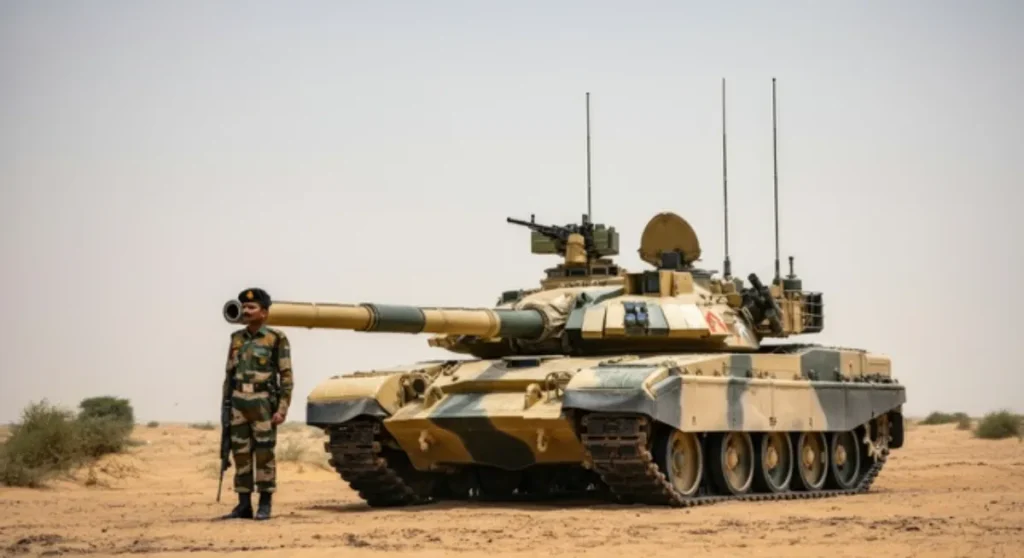
According to defense analysts, the development process involved extensive trials in different terrains, from the deserts of Rajasthan to the frozen heights of Ladakh. Each trial revealed improvements needed in everything from engine performance at high altitude to crew comfort in extreme temperatures.
The indigenous development of Bhairav also strengthens India’s defense manufacturing sector. By producing these tanks domestically, India reduces dependence on foreign suppliers, creates jobs, and develops technological expertise that benefits other military projects.
Operational Advantages in Combat Scenarios
Let’s look at how the Bhairav performs in real-world situations that Indian forces might face.
Mountain Warfare
In mountainous terrain, the Bhairav’s advantages become most apparent. Its power-to-weight ratio allows climbing steep gradients that would stop heavier tanks. The compact size means it can use mountain roads barely wide enough for civilian trucks. And when positioned on high ground, its 105mm gun provides devastating fire support for infantry operations below.
Rapid Deployment Operations
Imagine a scenario where enemy forces attempt to occupy a strategic pass. With traditional heavy tanks, deployment could take days of road movement. The Bhairav can be loaded onto transport aircraft and flown to nearby airstrips, then driven the remaining distance in hours. This rapid response capability changes the strategic calculus for potential adversaries.
Combined Arms Operations
The Bhairav works best as part of integrated combat teams. When coordinated with infantry, artillery, and air support, these light tanks provide mobile firepower that can exploit enemy weaknesses. Their communication systems allow real-time coordination with other units, creating a networked battlefield where information flows seamlessly.
Comparison with Global Counterparts
India isn’t alone in developing light tanks. Several nations have recognized their value, particularly for specific terrain challenges.
- Chinese Type 15 Light Tank – Perhaps the most direct competitor, designed specifically for plateau warfare. Weighs slightly more than Bhairav but shares a similar design philosophy.
- American M10 Booker – Recently developed for rapid deployment, though designed more for lowland operations than mountain warfare.
- Russian Sprut-SD – Airborne light tank with impressive firepower but less focus on sustained high-altitude operations.
The Bhairav’s specific optimization for Himalayan conditions gives it unique capabilities that off-the-shelf foreign tanks cannot match. The engine, for instance, has been specifically tuned to perform at altitudes where oxygen levels are 40% lower than sea level.
Production and Induction Timeline
The Indian Army has placed initial orders for these combat units, with production expected to ramp up progressively. While exact numbers remain classified, defense ministry sources suggest the acquisition will be substantial enough to equip multiple regiments dedicated to mountain warfare.
Manufacturing happens at Larsen & Toubro’s advanced facilities, where skilled workers and automated systems work together to ensure quality and precision. Each tank undergoes rigorous testing before acceptance by the Army, ensuring that only combat-ready vehicles enter service.
Phased Induction Approach
- Initial batch for operational trials and crew training
- Feedback-based modifications and improvements
- Full-scale production for border deployment
- Ongoing upgrades as technology evolves
Training and Crew Preparation
Operating the Bhairav requires specialized skills. The Indian Army has established dedicated training programs where crews learn not just vehicle operation but tactical employment in mountain warfare scenarios.
Simulator training allows crews to practice maneuvers and combat scenarios without the expense and wear of actual field exercises. Once basic proficiency is established, crews progress to actual vehicles, first in controlled environments and eventually in realistic field conditions.
The three-person crew design reflects lessons from modern tank warfare. Automation handles many functions that previously required additional crew members, making the tank easier to operate while maintaining combat effectiveness.
Strategic Impact on Border Security
The deployment of Bhairav tanks fundamentally changes the military balance in disputed border regions. Previously, these areas saw infantry and artillery as the primary forces, with armored support difficult or impossible to provide. Now, commanders have the option of a rapid armored response to developing situations.
This capability serves both defensive and deterrent purposes. Defensively, it allows Indian forces to quickly reinforce threatened positions with mobile firepower. As a deterrent, potential adversaries must account for the possibility of encountering armored resistance even in remote mountain areas previously considered unsuitable for tanks.
Challenges and Considerations
No weapons system is perfect, and the Bhairav faces its own set of challenges that military planners must address.
Maintenance in Remote Areas
High-altitude deployment means maintenance crews must work in extremely difficult conditions. Spare parts supply chains must function across hundreds of kilometers of mountain roads subject to landslides and weather closures. The Army has addressed this by establishing forward maintenance facilities and ensuring modular design allows field replacement of major components.
Crew Endurance
Operating armored vehicles at high altitude is physically demanding. Crews require acclimatization, regular rotation, and specialized medical support. The tank includes oxygen supplementation systems, but human endurance remains a limiting factor in extended operations.
Cost Considerations
While more affordable than heavy tanks, the Bhairav still represents a significant investment. Each unit costs several crores of rupees when factoring in the vehicle itself, ammunition, spare parts, training, and support infrastructure. Budget constraints mean procurement must be balanced against other defense priorities.
Future Upgrades and Variants
The Bhairav platform offers potential for evolution as technology advances and operational experience accumulates.
Possible future enhancements include active protection systems that intercept incoming missiles, more powerful engines for even better performance, upgraded electronics for drone integration, and enhanced night fighting capabilities using advanced thermal imaging.
Variant possibilities include armored recovery vehicles based on the Bhairav chassis, self-propelled anti-aircraft versions, and command post variants with enhanced communication equipment.
Expert Perspectives
Defense analysts have generally praised the Bhairav’s development, seeing it as evidence of India’s maturing defense industrial base. The ability to identify a specific operational need and develop an indigenous solution demonstrates growing technological confidence.
Retired military officers with mountain warfare experience emphasize the Bhairav’s potential to transform tactics in border regions. The combination of mobility and firepower opens possibilities that simply didn’t exist when only infantry and artillery could operate in these areas.
Impact on Indigenous Defense Manufacturing
Beyond its military value, the Bhairav project strengthens India’s domestic defense industry. The technologies developed for this tank have applications in other systems. The skilled workforce gains experience in advanced manufacturing. And successful completion builds confidence for undertaking even more ambitious projects.
This aligns with the government’s emphasis on self-reliance in defense production, reducing the foreign exchange burden of imports while building strategic autonomy.
Note: This YouTube video is credited to Indian defence analysis channel.
The Road Ahead
As the Bhairav enters service in larger numbers, its true impact will become clearer through operational experience. Early indications suggest that it fulfills its intended role effectively, giving commanders a valuable new tool for mountain warfare.
The project also represents broader trends in Indian defense planning toward systems specifically tailored to the nation’s unique strategic environment rather than simply purchasing foreign equipment designed for different conditions.
Looking forward, the Bhairav will likely remain in service for decades, receiving periodic upgrades to maintain relevance against evolving threats. Its success may inspire similar approaches in other capability areas where India’s specific needs differ from off-the-shelf solutions available globally.
Conclusion
The Bhairav high-speed combat unit marks an important milestone in India’s journey toward defense self-reliance and strategic autonomy. By addressing specific operational requirements through indigenous development, it demonstrates both technical capability and strategic foresight.
For the soldiers who will crew these vehicles, the Bhairav represents hope that they will have the tools needed to defend India’s borders effectively. For the nation, it symbolizes growing confidence in domestic defense capabilities. And for potential adversaries, it serves notice that India’s military modernization continues advancing, closing capability gaps and strengthening deterrence.
As global security challenges grow more complex and terrain-specific capabilities become increasingly important, the Bhairav stands as an example of matching military hardware to strategic needs rather than forcing strategies to fit available equipment. This alignment of ends and means is the hallmark of mature defense planning.
Frequently Asked Questions (FAQ)
What is the Bhairav light tank?
The Bhairav is an indigenously developed light tank designed specifically for high-altitude and mountainous terrain operations. Weighing approximately 25 tons and armed with a 105mm gun, it provides mobile firepower in areas where heavier tanks cannot operate effectively.
Why does India need light tanks like Bhairav?
India’s northern borders feature extremely challenging mountain terrain where traditional heavy tanks cannot operate. The Bhairav fills this capability gap by providing armored firepower that can be rapidly deployed in high-altitude areas, cross lightweight bridges, and navigate narrow mountain roads.
How does Bhairav differ from main battle tanks like Arjun?
The Bhairav weighs roughly half as much as the Arjun (25 tons vs. 50 tons), making it much more mobile and deployable in mountainous terrain. While it has lighter armor and a smaller gun, it compensates with superior mobility, speed, and the ability to operate where heavier tanks simply cannot go.
Can the Bhairav be airlifted?
Yes, one of the Bhairav’s key advantages is its ability to be transported by military aircraft like the C-17 Globemaster. This allows rapid deployment to remote airstrips near border areas, dramatically reducing response time compared to road movement of heavier tanks.
What is the main weapon on the Bhairav?
The Bhairav is equipped with a 105mm rifled gun capable of firing various ammunition types, including armor-piercing and high-explosive rounds. It also features a coaxial machine gun for engaging infantry and light targets.
How many crew members operate the Bhairav?
The Bhairav has a three-person crew consisting of a commander, gunner, and driver. Modern automation and fire control systems allow efficient operation with this reduced crew size compared to older tank designs.
Where is the Bhairav manufactured?
The Bhairav is manufactured domestically in India by Larsen & Toubro in collaboration with the Defence Research and Development Organisation (DRDO), supporting indigenous defense production capabilities.
What is the maximum speed of Bhairav?
The Bhairav can reach speeds of approximately 60 kilometers per hour on roads and around 35 kilometers per hour on rough terrain, making it one of the fastest armored vehicles in the Indian Army.
How does Bhairav perform at high altitudes?
The Bhairav has been specifically engineered for high-altitude operations with an engine tuned to perform in low-oxygen environments and systems designed to function in extreme cold. Extensive trials in Ladakh and other high-altitude areas validated its capabilities.
What protection does the Bhairav offer to its crew?
The Bhairav features modular armor that can be configured based on threat levels, protecting against small arms fire, artillery fragments, and certain anti-tank weapons. It also includes smoke grenade launchers and other defensive systems to enhance survivability.
How much does a Bhairav light tank cost?
While exact costs are not publicly disclosed, each Bhairav unit costs several crores of rupees when accounting for the vehicle, ammunition, spare parts, training, and support infrastructure. The indigenous production helps control costs compared to imported alternatives.
When will Bhairav be fully deployed?
The Bhairav is currently in phased induction with initial units undergoing operational trials and crew training. Full-scale deployment to border areas is expected to proceed progressively over the coming years based on production capacity and operational requirements.
References:
- Defence Research and Development Organisation (DRDO) – Official Publications
- Ministry of Defence, Government of India – Press Releases and Annual Reports
- Indian Army – Equipment and Modernization Updates
- Larsen & Toubro Defence – Project Information
- Various defense analysis publications and expert commentaries
Note: This article is intended for informational purposes. Specific technical details and operational deployments may be subject to classification by Indian defense authorities.
About The Author
